

When Your Loved One With Dementia Keeps Asking What Day It Is: Can a Dementia Clock Help?
Affiliate Disclosure: This post contains affiliate links, including links through Amazon Associates and Amazon Creator Connections. I may earn a commission from qualifying purchases at no additional cost to you. As an Amazon Associate, I earn from qualifying purchases.
Caring for someone with dementia often means finding small ways to make everyday life feel a little less confusing.
One simple tool that helped my mom was a large-display dementia clock.
When someone is living with dementia, keeping track of the time, day, date, or even whether it’s morning or evening can become difficult. Having that information clearly displayed in one place can provide an extra source of orientation and reassurance.
Sometimes a small change in the environment can make a meaningful difference.
Why Time Can Become Confusing With Dementia
Someone living with dementia may wake from a nap and wonder whether it’s morning or evening. They may repeatedly ask what day it is or what time an appointment is.
Those questions aren’t necessarily just about knowing the time.
Sometimes they’re really asking:
What’s happening right now? What am I supposed to be doing? Am I okay?
A dementia clock can’t eliminate confusion, but it can provide a simple, consistent visual cue throughout the day.
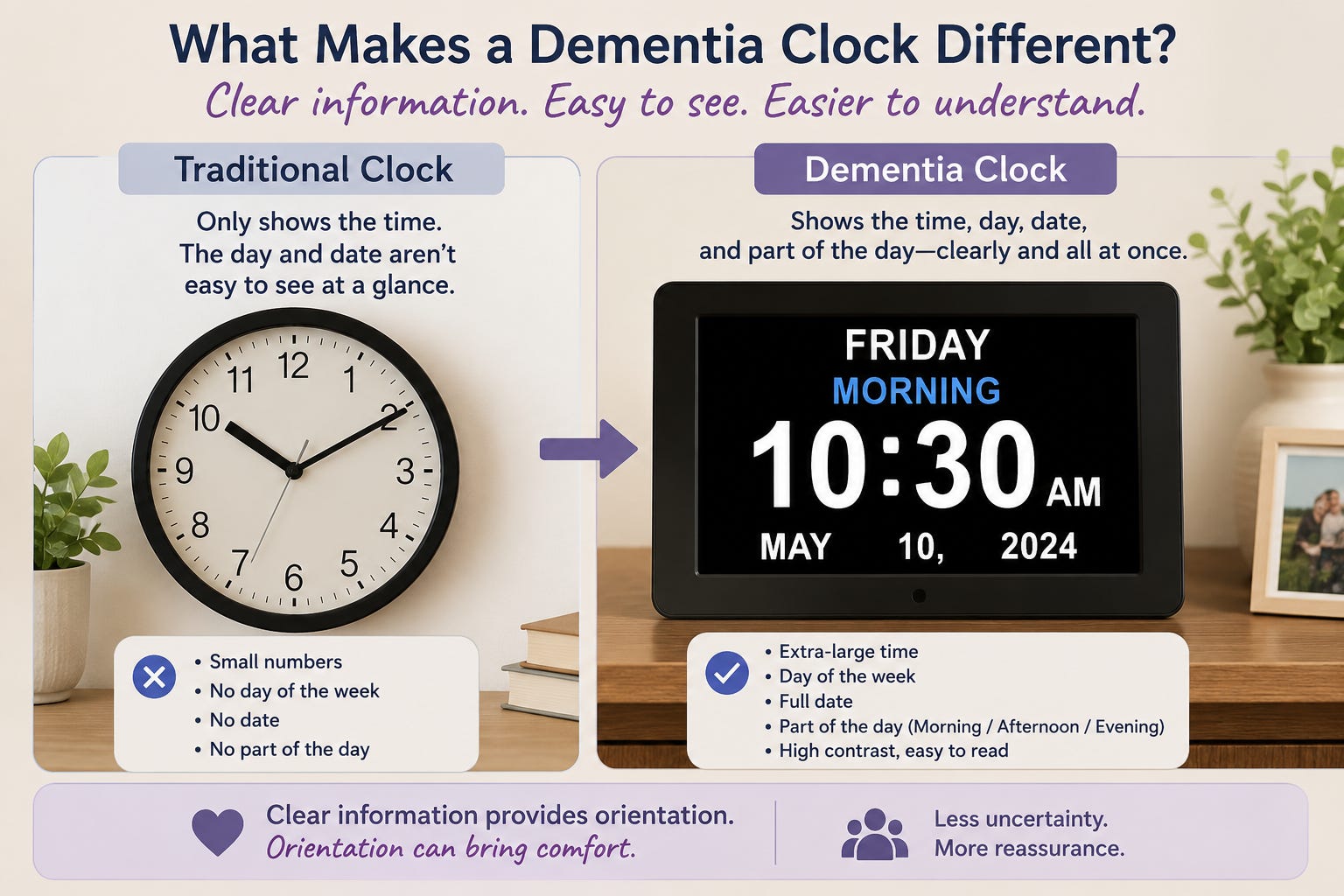
1. Provides Orientation at a Glance
Unlike a traditional clock, many dementia clocks clearly display several pieces of information together:
- Time
- Day of the week
- Date
- Morning, afternoon, or evening
Instead of having to remember this information or ask someone else, your loved one may be able to simply look at the clock.
That little bit of clarity can be reassuring.
2. Reduces Uncertainty
Imagine waking up and not knowing whether it’s morning or night.
That would feel unsettling for any of us.
A clear display showing FRIDAY — MORNING — 10:30 AM, for example, provides several pieces of information at once.
Knowing where they are in the day may help reduce some of the uncertainty that can contribute to worry or frustration.
3. Supports Independence
As an occupational therapist and caregiver, this is one of the things I especially appreciate about simple environmental supports.
The goal isn’t always to do more for someone.
Sometimes it’s about changing the environment so they can do more for themselves.
In occupational therapy, we often look at how the environment can be adapted to better support a person’s abilities.
If your loved one can look at the clock and answer their own question about the time or day, that’s a small moment of independence.
And those small moments matter.
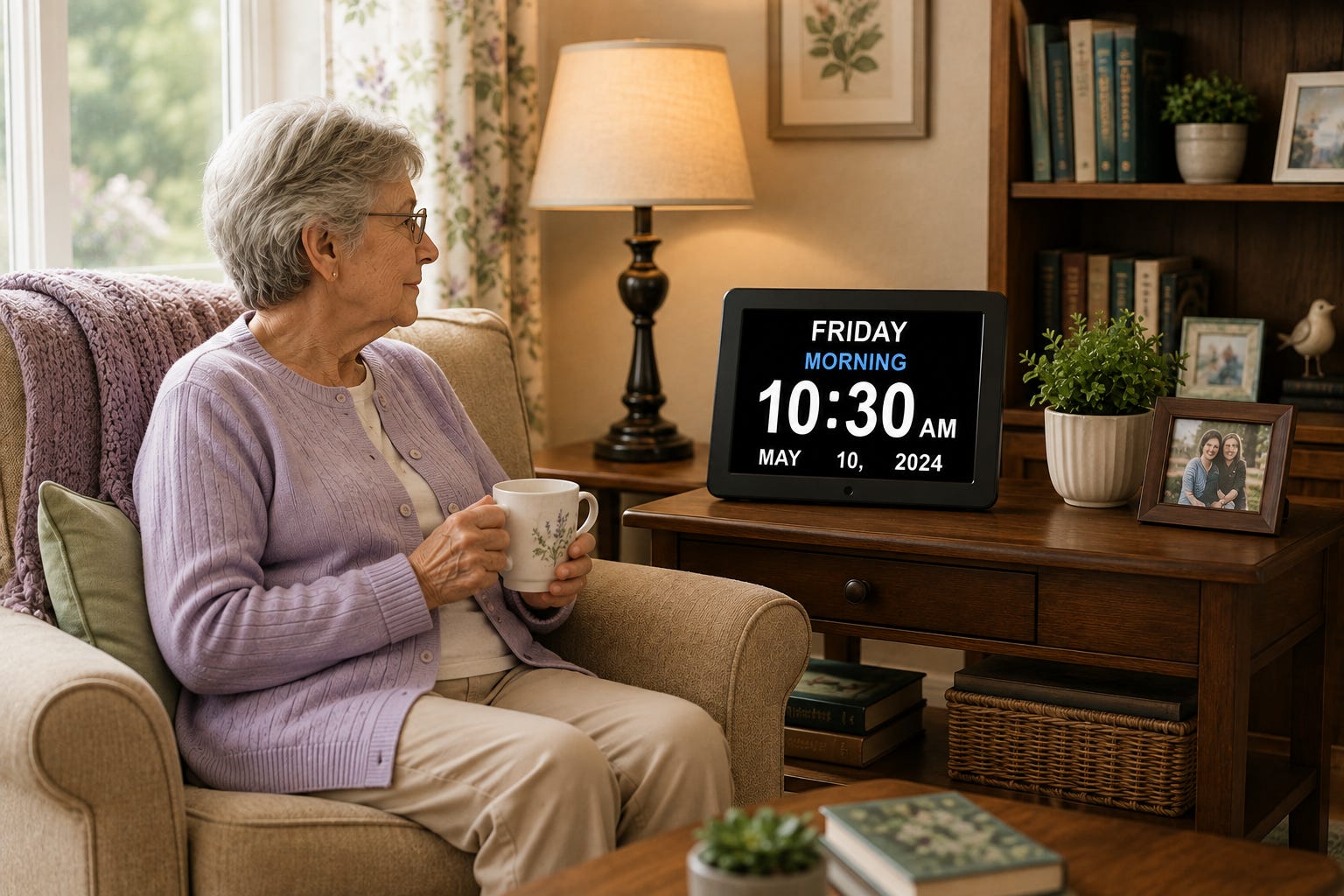
4. May Help With Repetitive Questions
Repetitive questions are common with dementia.
A dementia clock won’t necessarily stop them, but it gives caregivers another gentle way to respond.
Instead of repeatedly answering:
“What day is it?”
you might say:
“Let’s look at your clock together.”
For some people, the clock may become a familiar visual reference for this information.
5. Creates a Familiar Point of Reference
Predictability can be comforting.
A dementia clock can become part of the person’s everyday environment and routine:
Morning. Lunch. Afternoon. Evening. Bedtime.
It can also work alongside other simple supports such as calendars, written routines, labeled drawers, familiar objects, and medication reminders.
The idea is simple:
Let the environment provide some of the cues.
Dementia Clocks Can Help Caregivers Too
These clocks aren’t only about supporting the person living with dementia.
They may help caregivers as well.
When you’re not there, knowing your loved one has a clear visual reference for the day and time may provide some reassurance.
And when you are together, spending less time answering questions about the time may leave a little more time for conversation, music, reminiscing, or simply being together.
What to Look for in a Dementia Clock
I would keep it simple.
Look for:
- Large, easy-to-read numbers
- High contrast
- Day and date displayed clearly
- Morning, afternoon, or evening shown
- A screen that isn’t overly cluttered
Placement matters too.
Put the clock somewhere your loved one naturally looks during the day—such as near a favorite chair, in the bedroom, or in a commonly used living area.
Looking for a Dementia Clock?
If you’re trying to decide which type of dementia clock may work best for your loved one, I’ve put together a separate guide based on both my occupational therapy perspective and my experience caring for my mom.
READ: Best Dementia Clocks for Seniors: What Helped My Mom Stay Oriented
I also recommend a large-display clock that makes the time, day, date, and part of the day easy to see at a glance.
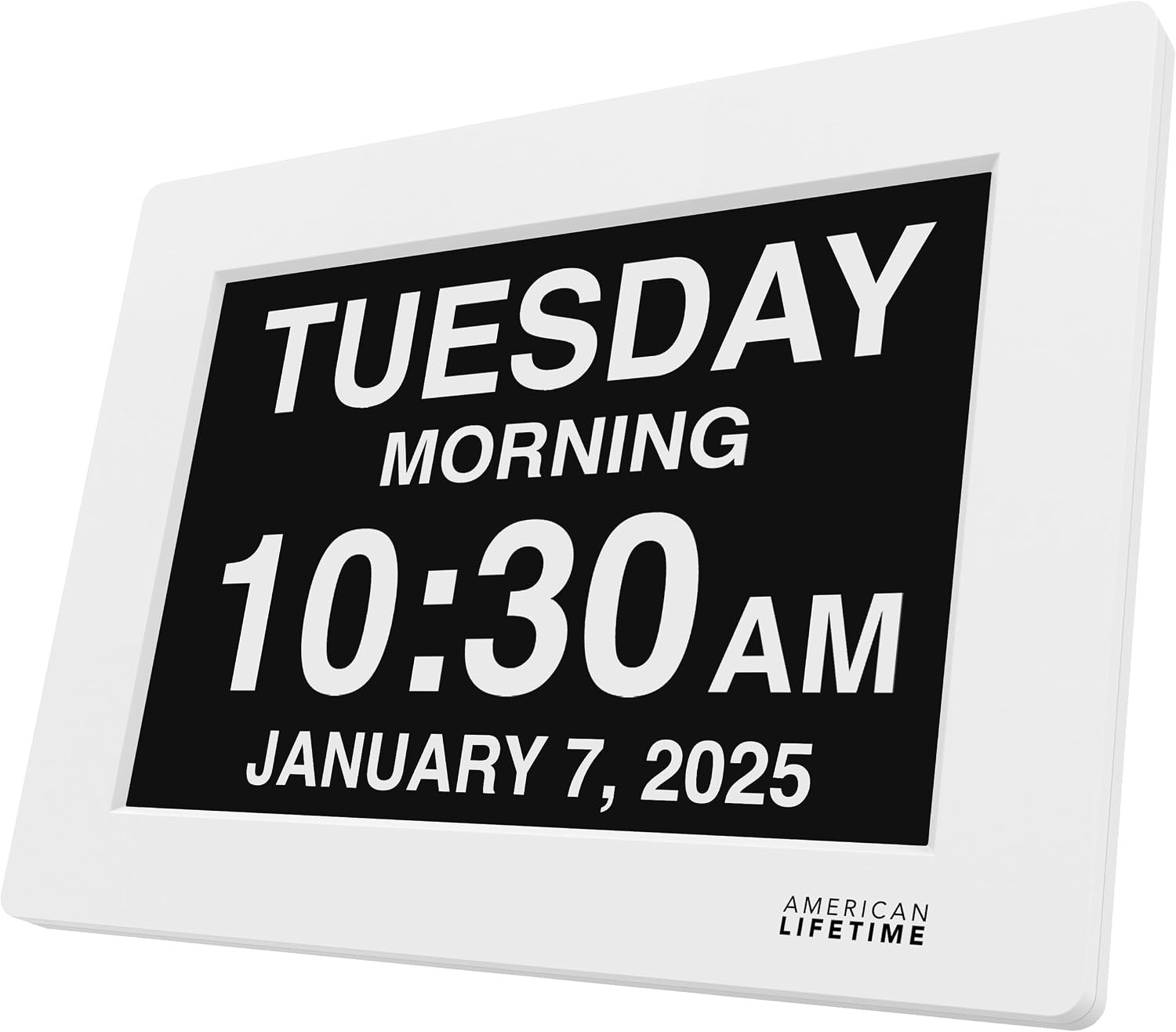
From my experience: The large display helped make the time, day, and date easier for Mom to see.
SEE THE CLOCK I RECOMMEND ON AMAZON →
Affiliate link. I may earn a commission from qualifying purchases at no additional cost to you.
A Small Change Can Make a Meaningful Difference
A dementia clock isn’t a cure for confusion or anxiety, and it won’t work the same way for everyone.
But it is a good example of something I learned both professionally and personally:
Small environmental changes can sometimes make everyday life easier.
Making information easier to see and routines easier to understand can help support independence while giving caregivers another simple tool to use throughout the day.
You don’t have to change everything at once.
Sometimes you can simply start with one thing.
Helpful Dementia Clock Resources
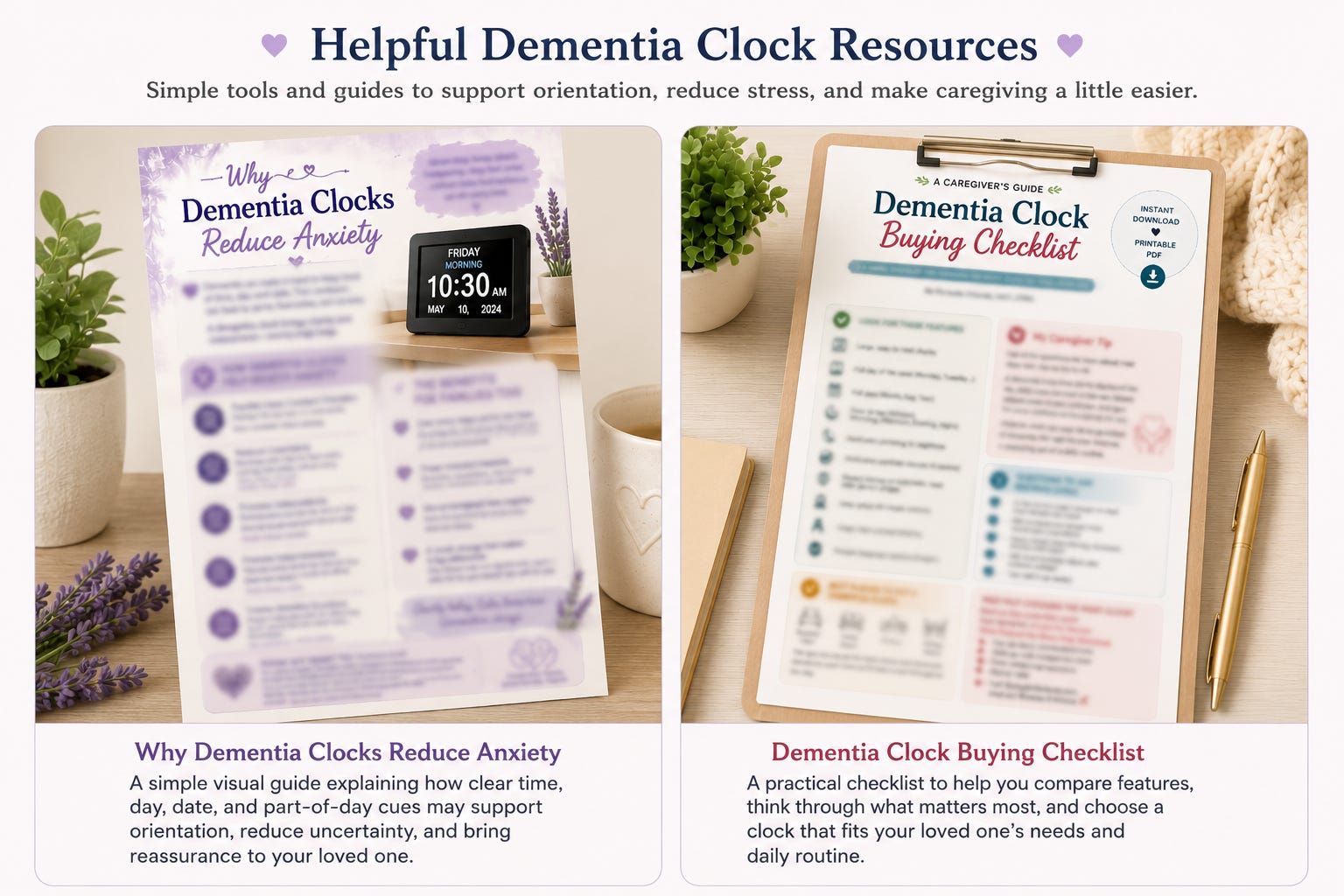
Why Dementia Clocks Reduce Anxiety Printable
A simple visual caregiver guide exploring how clear cues for time, day, date, and part of the day may support orientation, reduce uncertainty, and provide reassurance.
Dementia Clock Buying Checklist
Not sure what features to look for? Use this checklist to compare display size, readability, day/date information, time-of-day cues, and other features before choosing a clock.
VIEW THE BUYING CHECKLIST ON ETSY →
You May Also Like
- When the TV Remote Becomes Too Complicated: Making TV Easier for Someone With Dementia
- Occupational Therapist-Recommended Products That Made Dementia Care Easier
About the Author
Kimberly Orlando, MOT, OTR/L, is an occupational therapist with more than 25 years of clinical experience and a former dementia caregiver for her mother, who lived with Lewy body dementia for six years.
Through Sunny by Kimberly, she shares practical, evidence-informed resources to help caregivers support safety, independence, and meaningful daily living.
Disclaimer: The information shared by Sunny by Kimberly is for educational and informational purposes only and is based on my experience as an occupational therapist and family caregiver. It is not intended to replace individualized medical, occupational therapy, or healthcare advice. Individual needs and abilities vary; consider your loved one’s specific needs and safety when choosing supportive tools. Always consult your appropriate healthcare professional regarding your specific situation.


