

Best Dementia Clocks for Seniors: What Helped My Mom Stay Oriented
Disclosure: This article contains affiliate links, including links to products featured through Amazon Creator Connections. I may earn commissions from qualifying purchases at no additional cost to you. As an Amazon Associate, I earn from qualifying purchases. I only recommend products I personally used, trusted, or would confidently recommend based on my experience as an Occupational Therapist and former dementia caregiver.
Not Sure Which Dementia Clock to Choose?
Choosing a clock can feel confusing because there are so many different features. I created a simple Dementia Clock Buying Checklist to help caregivers know what to look for, what questions to ask, and where to place a clock for the best visibility.
Best Dementia Clocks for Seniors
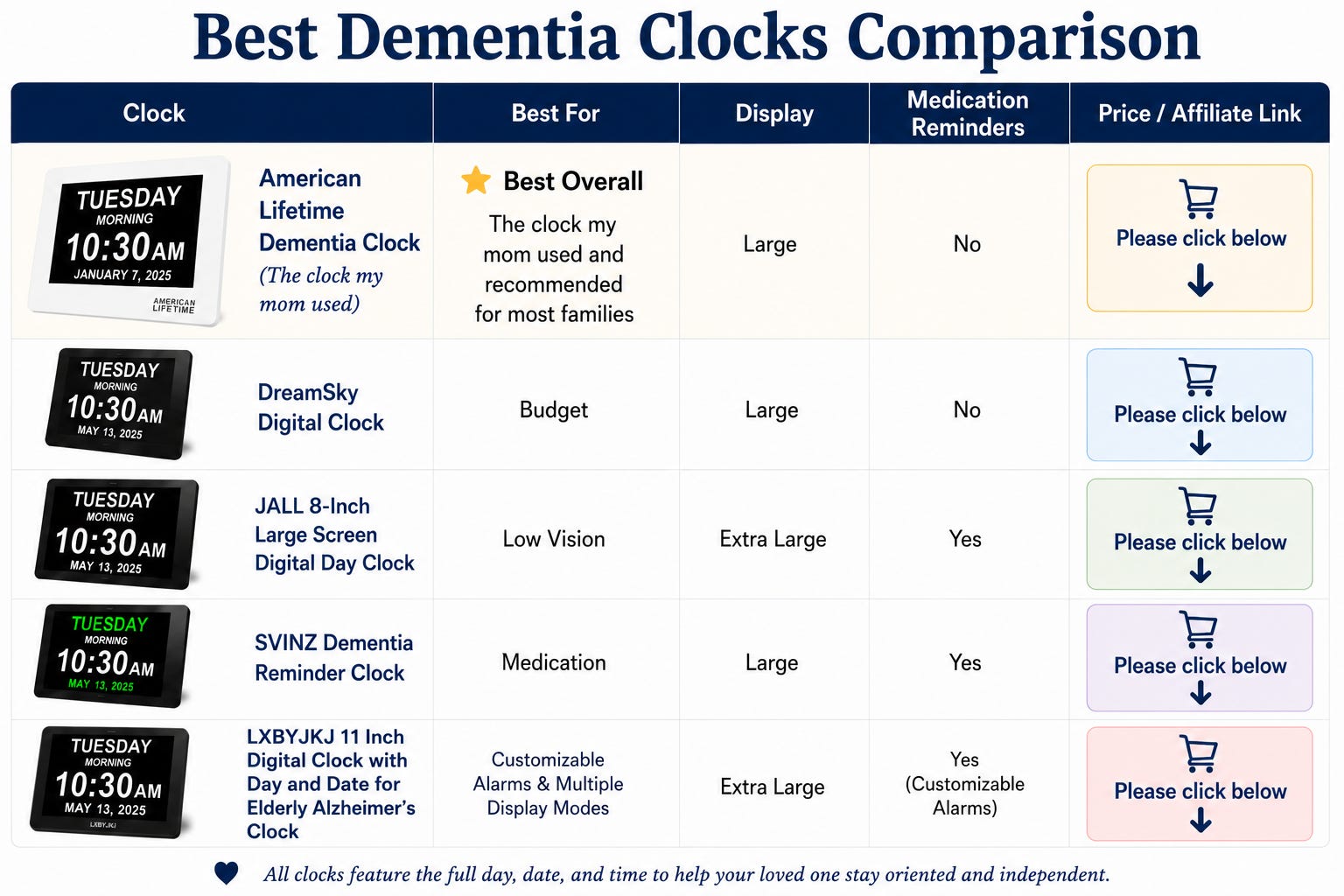
Best Overall: American Lifetime Dementia Clock
Best for: most families living with dementia, seniors who frequently ask about the day or time, bedrooms, living rooms, or kitchens, caregivers looking for an easy-to-read clock
Why I Chose It For My Mom: large, high-contrast display that was easy to read, clearly showed the full day, date, and time, included “Morning,” “Afternoon,” “Evening,” and “Night,” which helped reduce confusion after naps, easy to see from across the room, simple setup without complicated menus, helped answer one of her most common questions: “What day is it?”
Best Budget Choice: DreamSky Digital Clock
Best for: budget-conscious families, first-time dementia clock buyers, simple everyday orientation
Why I Like It: large, clear numbers, easy setup, great value for the price
Best Large Display: JALL 8-Inch Large Screen Digital Day Clock
Best for: low vision, bedrooms and living rooms, reading from across the room
Why I Like It: extra-large display, high-contrast screen, easy to read from a distance
Best Medication Reminder Clock: SVINZ Dementia Reminder Clock
Best for: medication schedules, daily routines, appointment reminders
Why I Like It: multiple reminder alarms, custom reminder messages, easy-to-read display
Best for Bedrooms: LXBYJKJ 11 Inch Digital Clock
Best for: seniors who need multiple reminders throughout the day, medication schedules, families wanting a larger 11-inch display, bedrooms, kitchens, or living rooms
Why I Like It: simple, uncluttered display, automatic brightness adjustment on many models, easy to understand at a glance
One of the hardest parts of caring for my mom was hearing the same questions repeatedly:
“What day is it?”
“Is it morning or night?”
“What time am I supposed to take my medicine?”
If you’re caring for someone living with dementia or Alzheimer’s disease, you’ve probably experienced something similar. Confusion about time and dates can increase anxiety and make everyday routines more difficult.
One simple change that made a noticeable difference for my mom was using a dementia clock. Instead of showing only the time, it displayed the full day, date, and whether it was morning, afternoon, evening, or night. That extra information helped reduce confusion and gave her more confidence throughout the day.
Why Can a Dementia Clock Help?
When my mom was living with dementia, knowing the day, date, and time wasn’t always as simple as it once was. A dementia clock can provide a visual point of reference that may help with orientation, routine, and reassurance throughout the day.
I created a simple printable guide explaining some of the ways a dementia clock may help reduce uncertainty and repetitive questions while supporting greater independence.
Traditional clocks assume we automatically know what day it is or whether it’s Tuesday morning or Thursday evening. For someone experiencing memory loss, that information isn’t always obvious.
A dementia clock provides clear, easy-to-read information that can help:
- Reduce repeated questions about the day or time
- Support daily routines
- Encourage greater independence
- Decrease anxiety caused by confusion
- Make caregiving a little easier for family members
While no clock can stop the progression of dementia, the right one can make everyday life feel calmer and more predictable.
Why I Chose the Dementia Clock for My Mom
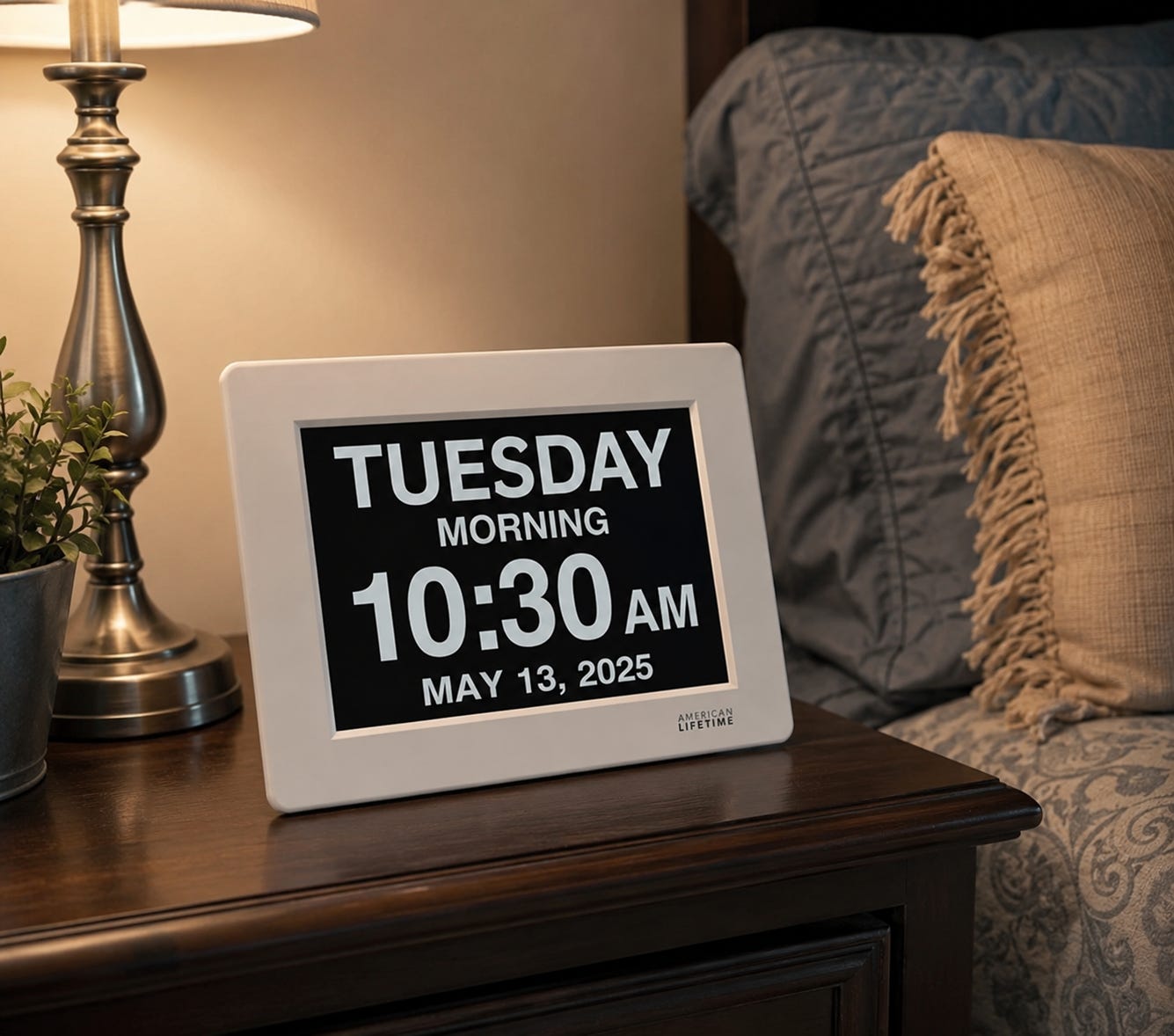
As my mom’s Lewy Body Dementia progressed, one of the questions I heard most often was, “What day is it?” or “Is it morning or night?” I wanted a clock that would answer those questions without her having to ask me over and over again.
What I liked about the American Lifetime Dementia Clock was how simple it was. The large, easy-to-read display clearly showed the time, full day of the week, complete date, and part of the day (Morning, Afternoon, Evening, or Night)—all without confusing abbreviations or small print. Those simple details helped my mom feel more oriented and gave her a little more confidence throughout the day.
As an occupational therapist, I also appreciated features that supported independence. The automatic dimming adjusted to the lighting in the room, making the display comfortable to read during the day and at night. The customizable alarms were helpful for reminders such as medications, meals, or appointments, and the backup battery meant the clock automatically reset after a power outage, so I didn’t have to worry about reprogramming it.
While no clock can stop the progression of dementia, this one became one of the most valuable tools in our home. It helped create a more predictable daily routine and reduced some of the uncertainty that memory loss can bring.
What I Liked Most
- Large, high-contrast display that was easy to read from across the room
- Clearly displayed the time, full day, full date, and part of the day
- No confusing abbreviations or tiny numbers
- Automatic dimming for comfortable viewing day and night
- Customizable reminders for medications, meals, and appointments
- Backup battery that automatically restored the correct time after a power outage
- Simple setup that made life easier for caregivers
Those small details made a big difference in helping my mom stay more oriented, maintain her daily routine, and feel a little more independent.
View the dementia clock I recommend on Amazon: American Lifetime Dementia Clock
Features to Look for Before Buying
Not every digital clock is designed with memory care in mind. Here are the features I recommend looking for.
Large Display
A large screen is easier to read from across the room and is especially helpful if your loved one also has vision changes.
Full Day and Date
Seeing “Tuesday, July 8” is much more helpful than simply seeing “7/8.”
Time of Day Labels
Words like Morning, Afternoon, Evening, and Night can reduce confusion, especially after naps.
Automatic Brightness
A screen that’s too bright at night can disturb sleep. Many dementia clocks automatically dim in the evening.
Simple Setup
Avoid clocks with complicated menus or tiny buttons. Caregivers appreciate devices that are easy to set up and maintain.
Where Should You Place the Clock?
Location matters.
I found the best places were:
- Next to the bed
- On a living room table
- Near the television
- In the kitchen, where meals are prepared
The goal is to make it visible throughout the day without requiring your loved one to search for it.
Want to understand why dementia clocks can be so helpful?
I also wrote about how clear visual cues for the day, date, and time can support orientation, independence, and reassurance for someone living with dementia.
→ Read: When Your Loved One With Dementia Keeps Asking What Day It Is: Can a Dementia Clock Help?
Looking for Additional Caregiver Support?
While the clock was one of our favorite tools, a few other products also made caregiving easier. If you’re caring for a loved one living with dementia, I’ve also created practical printable resources based on my experience as an occupational therapist and former family caregiver.
You’ll find:
· Dementia Activity Planner
· Drawer Labels
· Daily Memory Book
· Caregiver Guides
· And more…
Click here to visit my Etsy Shop
Together, these simple tools can create a more reassuring daily routine.
Final Thoughts
Every person living with dementia is different, and what works for one family may not work for another.
For my mom, having a clock that clearly displayed the day, date, and time helped reduce confusion and gave her a greater sense of independence. It didn’t solve every challenge, but it became one of the most useful tools in our home.
If you’re currently caring for someone with memory loss, I hope sharing what worked for our family helps you find something that brings a little more peace to yours.
Continue Reading
If you enjoyed this article, you might also like:
When Your Loved One With Dementia Keeps Asking What Day It Is: Can a Dementia Clock Help?
An OT-informed look at how a simple visual cue for time, day, and date may support orientation, daily routines, and independence for someone living with dementia
Nighttime Safety for Someone With Dementia: 8 Practical Changes for Caregivers
Discover 8 practical nighttime safety changes that can help reduce confusion, prevent falls, and make evenings and overnight hours safer for someone living with dementia.
Stay Connected
If you’d like more practical dementia caregiving strategies, caregiver resources, and occupational therapy insights, visit my homepage and subscribe to Sunny by Kimberly to receive new articles and resources directly in your inbox.
About the Author
Kimberly Orlando, MOT, OTR/L, is an occupational therapist with 25 years of clinical experience across hospital, home health, skilled nursing, and community-based settings. She is passionate about helping older adults, caregivers, and families discover meaningful activities that support engagement, independence, and quality of life. Through her work as an educator and content creator, Kimberly shares practical strategies for healthy aging, cognitive wellness, and purposeful living.