

Nighttime Safety for Someone With Dementia: 8 Practical Changes for Caregivers
Affiliate Disclosure: This article may contain affiliate links, including Amazon affiliate links and products that may be part of Amazon Creator Connections campaigns. I may earn a commission from qualifying purchases at no additional cost to you. As an Amazon Associate, I earn from qualifying purchases.
Nighttime can bring a different set of challenges when caring for someone living with dementia.
A home that feels familiar and easy to navigate during the day may become confusing after dark. Reduced lighting, shadows, fatigue, changes in sleep patterns, and difficulty recognizing surroundings can all make nighttime movement more challenging.
For caregivers, the goal is not to eliminate every possible risk. It is to create an environment that is easier to understand and navigate while preserving as much comfort and independence as possible.
Fortunately, some of the most useful changes are also relatively simple.
Why Nighttime Can Be More Difficult With Dementia
People living with Lewy body dementia and other forms of dementia may experience changes in sleep, orientation, vision, judgment, and their ability to interpret their surroundings.
Some people also experience increased confusion or restlessness later in the day, sometimes referred to as sundowning.
At night, even an ordinary trip from the bedroom to the bathroom can become more complicated. A dark hallway, an unfamiliar shadow, a loose rug, or difficulty finding a light switch can create additional challenges.
This is why I like to think about nighttime safety in layers: lighting, clear pathways, orientation, bathroom safety, and a way to get help when needed.
1. Make the Path to the Bathroom Easy to See

One of the simplest places to start is lighting.
Instead of expecting someone to locate and operate a light switch in the dark, consider adding low-level lighting along commonly used nighttime routes.
A motion-sensor night light can automatically provide light when someone gets out of bed or enters a hallway.
The goal is not necessarily to make the house brightly lit all night. A gentle light may be enough to make the floor, doorway, and route to the bathroom easier to see.
Practical tip: Walk the bedroom-to-bathroom route yourself at night with the regular lights turned off. You may notice dark corners or obstacles that are not obvious during the day.
→ View the motion-sensor night light I recommend
2. Clear the Walking Route
A clear pathway is just as important as good lighting.
Look carefully for objects that could make night-time walking more difficult, including:
- Loose rugs or curled rug edges
- Electrical cords
- Shoes and slippers left on the floor
- Small tables or baskets in walking paths
- Clutter near the bed
- Furniture that narrows a hallway
Try to keep the route between the bed and bathroom as simple and predictable as possible.
Consistency matters, too. Frequently rearranging furniture can make a familiar environment harder to navigate for someone experiencing memory or spatial difficulties.
3. Consider Support When Getting Out of Bed
Getting in and out of bed can become more difficult with age, mobility changes, illness, or dementia.
For some people, an appropriately selected bed-assist rail may provide additional support when transitioning between sitting and standing.
Some models also include a motion-activated light, combining physical support with nighttime visibility.
However, bed rails are not appropriate for everyone. Depending on the person’s mobility, cognition, behavior, and type of bed, they can introduce entrapment or injury risks. A healthcare or occupational therapy professional can help determine whether a particular setup is appropriate.
→ See the bed-assist rail with motion light
4. Think Carefully About Bathroom Safety
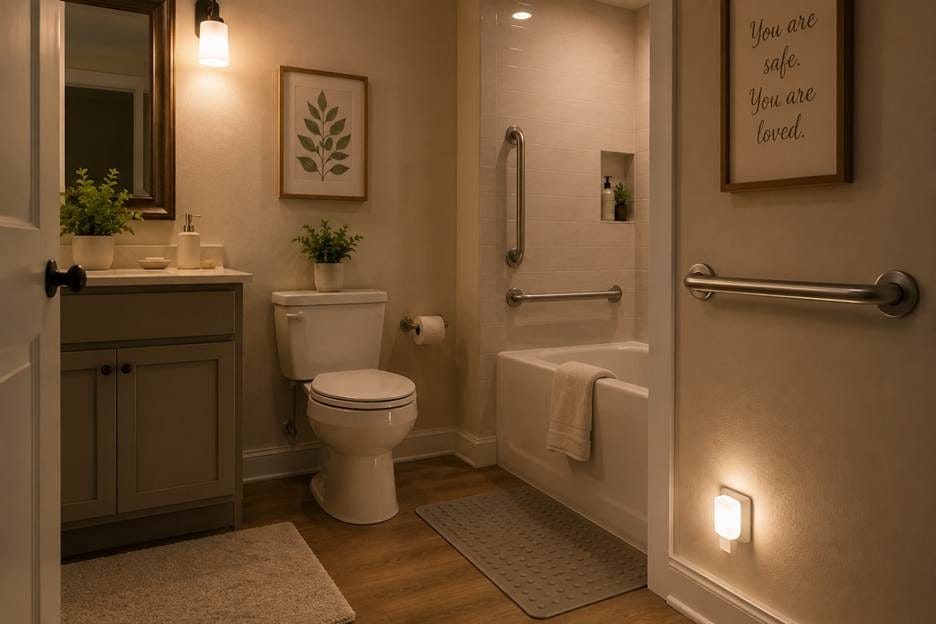
Bathrooms deserve special attention because wet or slippery surfaces, hard flooring, and the challenge of getting in and out of a tub or shower can increase fall risk.
Simple environmental changes may include better lighting, keeping frequently used toiletries within easy reach, reducing clutter, and addressing slippery surfaces.
A non-slip shower or bathtub mat may provide a more secure surface in appropriate situations. Properly installed grab bars can also provide support when entering or exiting a shower or bathtub.
Grab bars should be designed and installed for that purpose. A towel rack should not be treated as a substitute for a properly installed grab bar.
→ See the non-slip shower and bathtub mat
5. Create a Simple Way to Call the Caregiver
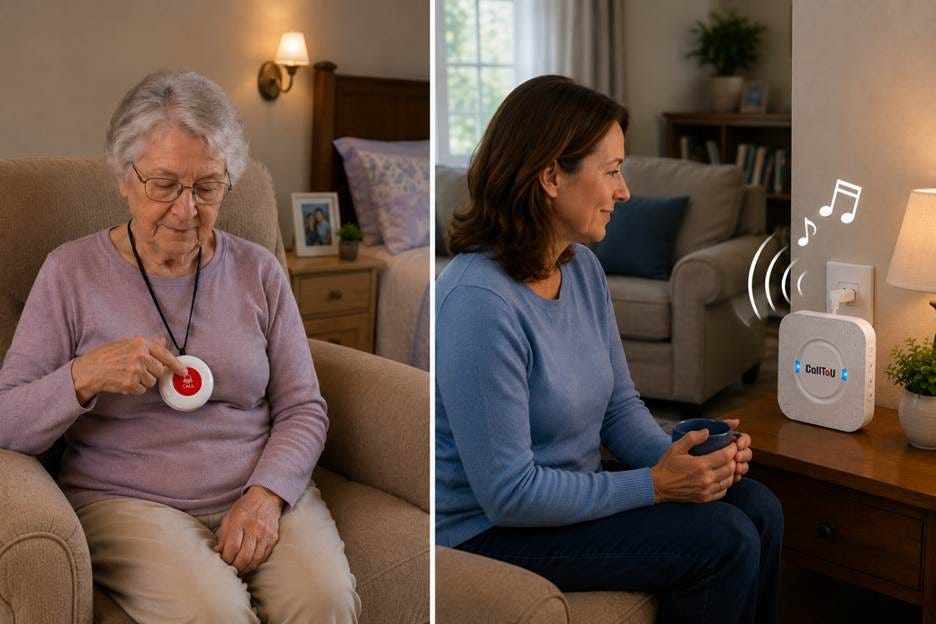
Sometimes the most useful safety measure is not preventing someone from getting up—it is making it easier for them to get assistance.
A caregiver pager or call-button system can give a person a simple way to alert a caregiver in another room.
Depending on the person’s abilities, this can provide another layer of communication without requiring them to find a phone or navigate a complicated device.
Before relying on any call system, make sure the person can understand and consistently use the button.
6. Bed Alarms May Help in Some Situations
For caregivers who need to know when a loved one gets out of bed, a bed-exit alarm or sensor may be worth discussing with the person’s care team.
These devices can alert a caregiver when someone begins getting out of bed.
They are not a substitute for supervision when supervision is necessary, and an alarm may not be appropriate for every person. Noise can also be startling or upsetting for some people with dementia.
If you use one, think about the entire system: Who will hear the alert? How quickly can they respond? Does the person with dementia become distressed by alarms?
Technology is most useful when it supports a thoughtful care plan rather than replacing one.
→ See the wireless bed alarm system
7. Make Day, Night, and Time Easier to Recognize
Orientation can also play a role in nighttime routines.
Someone who wakes during the night may not immediately recognize whether it’s morning, afternoon, or the middle of the night.
A large-display dementia clock showing the time, day, date, and part of the day may provide useful visual cues for some people.
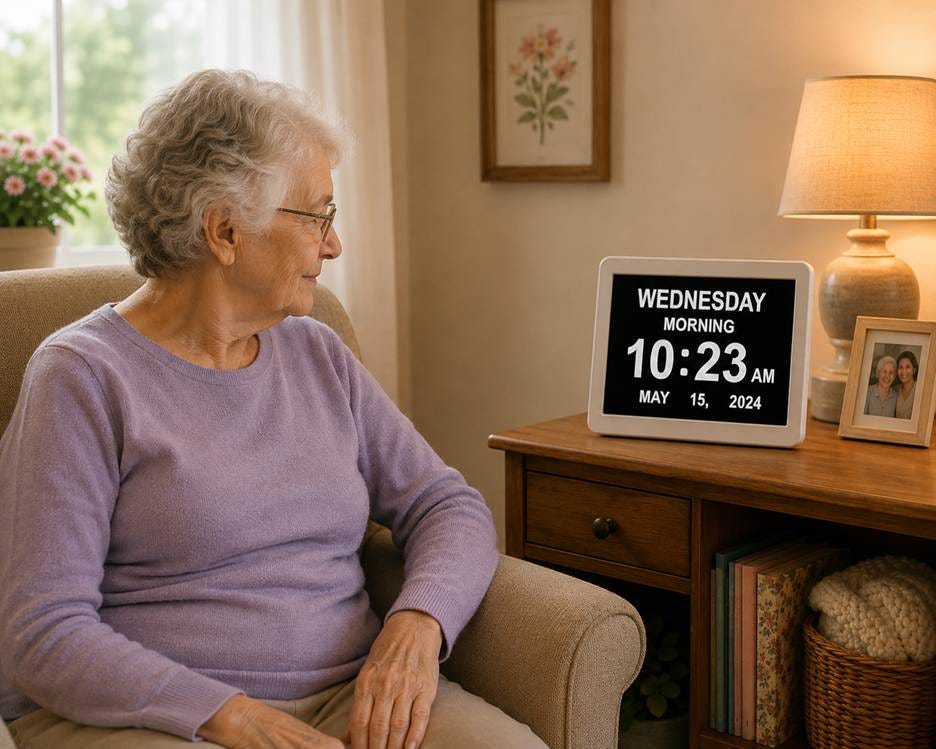
I’ve written more extensively about dementia clocks because they’re one of the simple environmental tools families often consider when trying to make daily routines easier to understand.
Want to understand how dementia clocks may help with orientation and reassurance?
→ When Your Loved One With Dementia Keeps Asking What Day It Is: Can a Dementia Clock Help?
Looking for help choosing one?
→ Best Dementia Clocks for Seniors: What Helped My Mom Stay Oriented
→ See the large-display dementia clock
8. Keep the Environment Calm and Familiar
Safety is not only about equipment.
Familiar surroundings and predictable routines can also make nighttime less confusing.
Try to keep bedtime routines relatively consistent. Familiar bedding, a comfortable room temperature, reduced evening noise, and a recognizable path through the home may all contribute to a calmer environment.
If nighttime behavior suddenly changes—for example, a person who normally sleeps well suddenly becomes very restless, confused, or awake throughout the night—don’t automatically assume it’s simply dementia. Pain, infection, medication effects, sleep disorders, or other medical issues can sometimes contribute to behavioral changes.
A significant or sudden change is worth discussing with a healthcare professional.
Start With the Person, Not the Products
It is easy to look at a long list of safety products and feel as though you need all of them.
You probably don’t.
Start by observing what actually happens in your home.
Does your loved one have difficulty seeing the hallway at night? A motion light may be useful.
Are they struggling when standing up from bed? Talk with an appropriate professional about safe mobility supports.
Do you worry that you won’t hear them when they need you? A caregiver call system might address that particular problem.
The best solutions are the ones that address a real need for that individual.
A Simple Nighttime Safety Walk-Through
Tonight, take five minutes and walk through the home as if you were the person you’re caring for.
Start at the bed.
Can you see where you’re going?
Is the route clear?
Can you easily identify the bathroom?
Are there slippery or unstable surfaces?
Is there a safe way to get assistance?
Small changes in those areas can make the environment easier for both the person living with dementia and the caregiver supporting them.
Products Mentioned in This Article
Looking for the products I have mentioned above?
I have gathered the nighttime and home-safety products mentioned in this article in one place, including motion-sensor lighting, caregiver call systems, bathroom safety products, and other practical items that may support everyday dementia care.
→ View Nighttime & Home-Safety Products
This article is for general educational and informational purposes and is not a substitute for individualized medical, occupational therapy, or home-safety advice. Dementia affects each person differently. Discuss significant changes in behavior, sleep, mobility, or safety with an appropriate healthcare professional.
About the Author
Kimberly Orlando, MOT, OTR/L, is an occupational therapist with more than 25 years of experience and a former family caregiver to her mother, who lived with Lewy body dementia for six years. Through Sunny by Kimberly, she shares practical, OT-informed ideas for dementia care, safer daily routines, meaningful activities, and aging well.
Explore more: Visit Sunny by Kimberly for dementia-care resources and practical OT-informed guidance, or browse my Dementia Care & Daily Living Shop for products I recommend for caregivers and older adults.


